Overview

December 11
11AM PT, 2PM ET

Register

Access to advanced research computing used to depend on where a researcher worked. Today, universities are changing that, giving researchers secure access to large research data, frontier-scale AI, and ready-to-use cloud environments, often in hours instead of weeks.

Join us to hear how three universities are expanding access to research resources. The University of Minnesota’s Masonic Institute for the Developing Brain built a secure research environment where scientists can analyze more than a petabyte of brain-development data without downloading it. Northeastern University’s National Deep Inference Fabric gives academic researchers free access to the inner workings of AI models with hundreds of billions of parameters. And Florida State University’s "Research Flywheel" combines seed funding, skills training, and ready-to-use governed research accounts.

You’ll leave with practical models for expanding research capacity on your campus, whether you’re supporting a single lab or an entire research community. 

Why attend:

  • Give researchers secure access to sensitive, large-scale data.
  • Expand AI compute without running your own GPU cluster.
  • Make cloud easier for researchers to use.
  • Learn what works and what to avoid.

Speakers


Emma Bortz

Northeastern University’s National Deep Inference Fabric

Damien Fair headshot

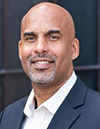
Damien Fair

The University of Minnesota's Masonic Institute

Damien Fair is a Cognitive Neuroscientist and Professor in the Institute of Child Development and the Department of Pediatrics at the University of Minnesota. He is also the Redleaf Endowed Director of the Masonic Institute of the Developing Brain. He trained at Washington University in St. Louis under Bradley Schlaggar, M.D., Ph.D. and Steven Petersen, Ph.D. His postdoctoral work was conducted at Oregon Health and Science University under Joel Nigg Ph.D., and Bonnie Nagel, Ph.D.

Combining technical advances in functional MRI, advanced mathematics, and expertise in psychology and neuroscience, Fair has been able to demonstrate several basic principles of brain development and its relationships to typical and atypical behaviors. His work cuts across both human and animal models using these non-invasive tools as a bridge between species. He has published more than 250 journal articles in high-impact journals including Nature, Science, Nature Neuroscience, Molecular Psychiatry, Neuron, PLoS, PNAS, and more. His work has been cited well over 53,000 times. In 2012, he was awarded the Presidential Early Career Award for Scientists and Engineers Issued by President Barack Obama and the White House. In 2020 he was named a John D. and Catherine T. MacArthur Fellow. He currently serves on the Council for the National Institute of Child Health and Human Development. He also serves on the Scientific Research Council for the Child Mind Institute. Fair is deeply committed to public service, community engagement, and STEM education. He founded and directed the Youth Engaged in Science (YES!) initiative and the OHSU Fellowship for Diversity and Inclusion. He’s also served on the Society for Neuroscience Program Committee, Public Education and Communication Committee, Press Committee, Workforce and Training Groups, and maintained a position on the BrainFacts.org editorial board. He has given several briefings to the Congressional Neuroscience Caucus and the American Brain Coalition on the intersection of brain development, policymaking, and education. He aims to advance the intersection of cognitive psychology and neuroscience and widen the reach of those who are trained and ‘touched’ by the efforts.


Bobby Sprinkle

Florida State University

Ron Bergmann headshot

Ron Bergmann — Moderator

Senior Fellow, Center for Digital Education

Ronald M. Bergmann most recently served as Vice President for Information Technology and CIO at Lehman College/CUNY. At Lehman, Ron and his team pioneered the use of analytics, automated major business processes, enhanced classroom technology, and opened the first virtual reality lab in the region. Lehman was cited as an exemplar in the 2018 Horizon Report for its innovative Lehman 360 digital platform. Ron is a fellow of the EDUCAUSE/CLIR Frye (now Leading Change) Institute and was named in 2017 as one of the nation’s top technologists, transformers, and trailblazers by the Center for Digital Education. Ron previously served as first deputy commissioner of New York City's information technology agency where he was selected by Government Technology Magazine as one of the nation's leading individuals redefining and advancing technology's role in government.